

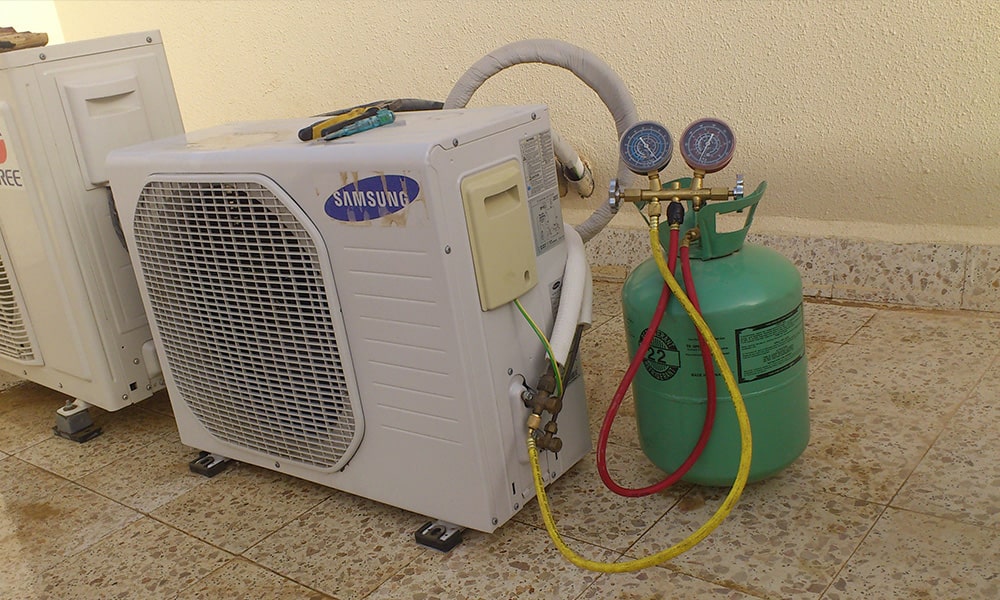
Ac Gas R134a,410A,404,407,R32 Refrigerant in Nairobi- Kenya
Air conditioners use “AC gas” (refrigerant) to transfer heat from inside a building to the outside, cooling the air in the process. The refrigerant constantly cycles between liquid and gas, absorbing heat as it evaporates (cools) and releasing it as it condenses (heats). Without this refrigerant, an AC would only be a fan.
Introduction to AC Gas and its Role
Air conditioning systems rely on a specialized substance known as AC gas, predominantly composed of refrigerants such as Freon. This gas serves a pivotal role in the cooling process, effectively transitioning between gaseous and liquid states to facilitate heat exchange within the system. When the air conditioning unit operates, the AC gas absorbs heat from the indoor environment, thereby lowering the ambient temperature in the space it is designed to cool.
The process begins when warm indoor air is drawn into the air conditioning unit, where it passes over evaporator coils filled with low-pressure AC gas. As the air contacts these coils, the refrigerant liquid within them evaporates, absorbing heat in the process. This phase change transforms the refrigerant into a gas, which is crucial for maintaining the efficiency of the cooling cycle. The gas, now warmer, travels to the compressor, which increases its pressure and temperature, preparing it for the next stage of the cycle.
Once the refrigerant gas exits the compressor, it moves toward the condenser coils located outside the building. Here, the heat absorbed from the indoor air is released into the outdoor environment. The AC gas condenses back into a liquid state, effectively removing heat from the interior space. This system of heat absorption and release forms the backbone of any successful air conditioning setup, demonstrating the indispensable role that AC gas plays in achieving efficient cooling. The maintenance of proper gas levels is essential for the energy efficiency of the unit and the comfort of its occupants, making awareness of AC gas critical for effective air conditioning operation.
How Air Conditioning Works
Air conditioning systems are essential for maintaining comfortable indoor climates, especially during hot weather. These systems operate using a cycle that involves four main components: the compressor, condenser, expansion valve, and evaporator. Understanding how these components work together is crucial for grasping the cooling process and the importance of AC gas filling.
The cycle begins with the compressor, which is often considered the heart of the air conditioning system. It pumps refrigerant gas, typically a blend designed for efficient cooling, under high pressure. As the refrigerant gas circulates out of the compressor, it moves to the condenser, where it releases heat absorbed from the indoor environment. The condenser transforms the refrigerant from a gas to a liquid state by dissipating heat to the outdoor air, often through a fan that assists in this process.
Once the refrigerant has cooled and condensed, it arrives at the expansion valve. This component plays a crucial role by allowing the high-pressure liquid refrigerant to expand and decrease in pressure as it moves into the evaporator. As the refrigerant enters the evaporator coil, it absorbs heat from the surrounding air within the indoor space, causing it to evaporate back into a gas. This process results in the extraction of heat from the indoor environment, effectively cooling the air.
Finally, the gaseous refrigerant returns to the compressor to repeat the cycle. The continuous circulation of refrigerant is essential for sustaining efficient cooling. Maintaining the appropriate level of AC gas is vital; insufficient gas levels can hinder the system’s performance and lead to inadequate cooling. Thus, regular checks to ensure the AC gas is filled adequately are important for optimal air conditioning efficiency.
Signs You Need AC Gas Filling
Air conditioning systems play a crucial role in maintaining a comfortable indoor environment, especially during peak summer months. However, to ensure optimal performance, it is essential to monitor the refrigerant levels within the unit. When these levels drop, it indicates a need for AC gas filling, which can be identified through several noticeable signs.
One of the primary indicators of low refrigerant is a marked reduction in cooling efficiency. When the air conditioner struggles to maintain the desired temperature, it may suggest that there is insufficient refrigerant to absorb heat effectively. Homeowners may experience longer runtimes as the unit attempts to cool the space, leading to increased energy consumption and higher utility bills.
Another common sign is the buildup of ice on the evaporator coils. Under typical operating conditions, these coils should remain free of ice. However, insufficient refrigerant results in lower pressure, leading to temperature drops that cause moisture in the air to freeze. If you observe ice formations, this can impede air flow and further compromise the system’s cooling capabilities.
Unusual noises from the AC unit may also signal a refrigerant issue. If you hear hissing or bubbling sounds, this could indicate a refrigerant leak, while gurgling noises may result from inadequate refrigerant levels causing the compressor to work harder. Both instances not only affect the cooling performance but may also lead to potential damage if not addressed promptly.
Being aware of these signs can help ensure timely maintenance of your air conditioning system. Responding promptly to indications of low refrigerant levels is crucial for preventing further damage and ensuring the efficiency of your cooling system. Regular inspections and gas filling when necessary can sustain optimal performance and prolong the lifespan of the unit.